
End-to-End
VR Discovery

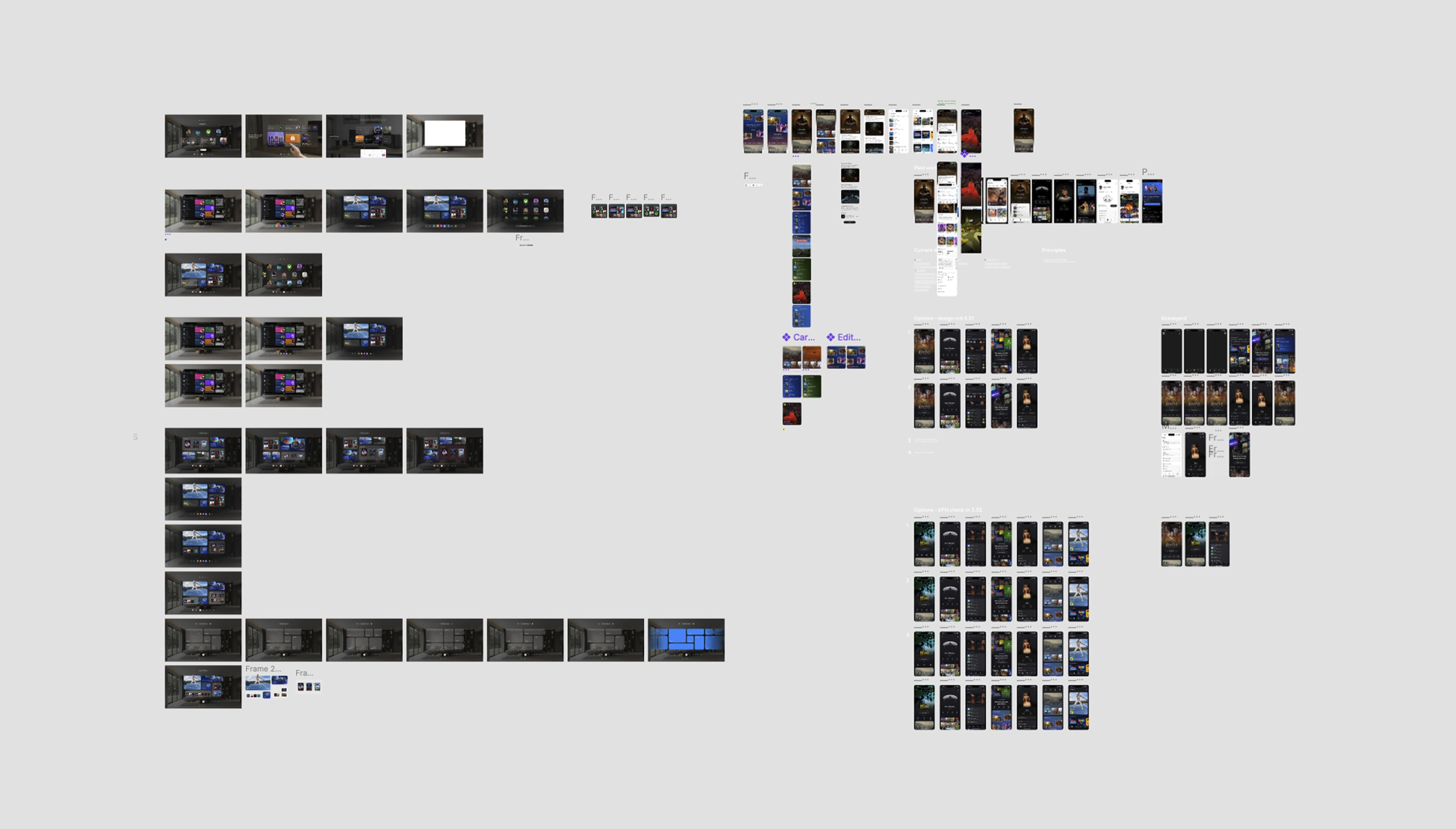
End-to-End VR Discovery was an ambiguous strategy project that I led as a Senior IC at Meta. I planned, organized, facilitated, and contributed to a design sprint, ideation, and leadership presentation aimed at solving this complex and controversial problem.

Prototype

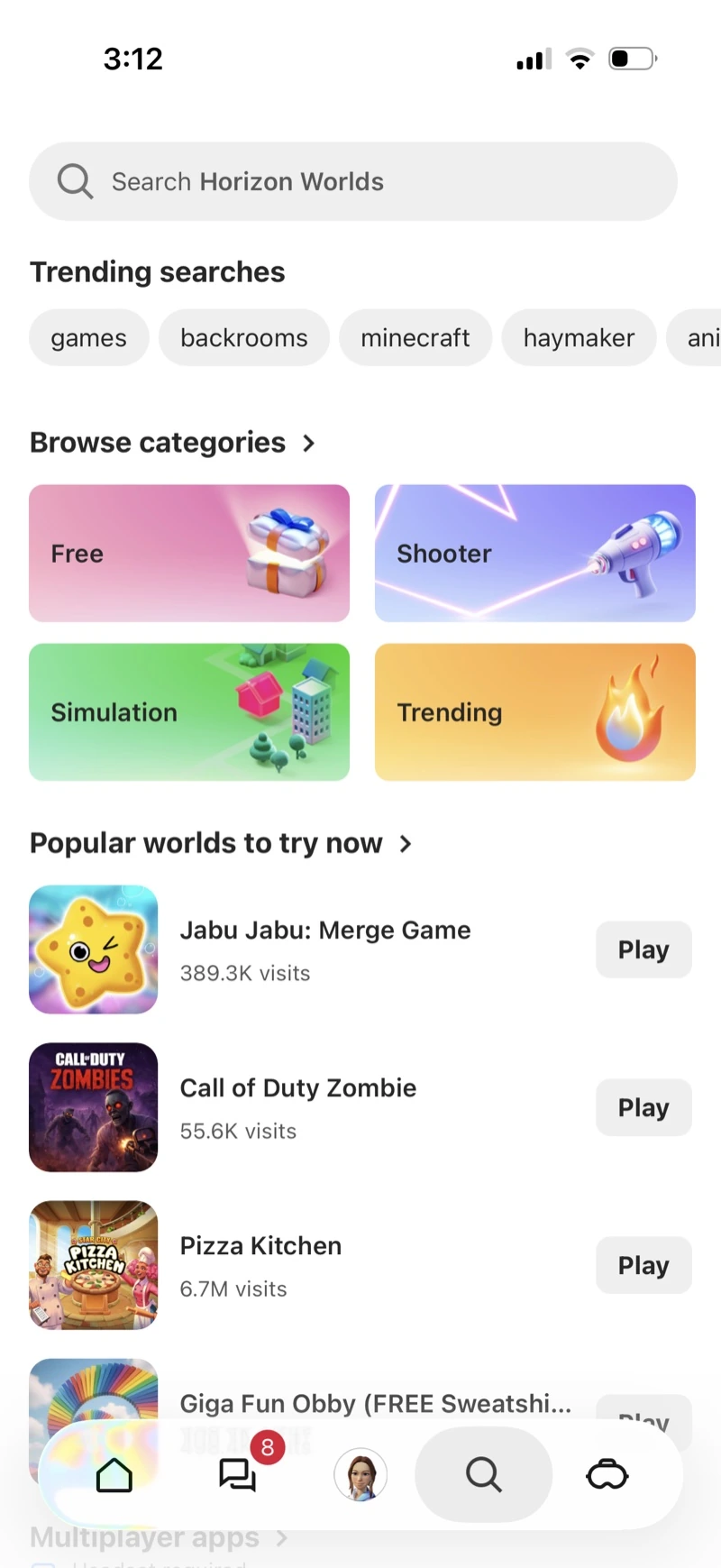
Previous landing experience

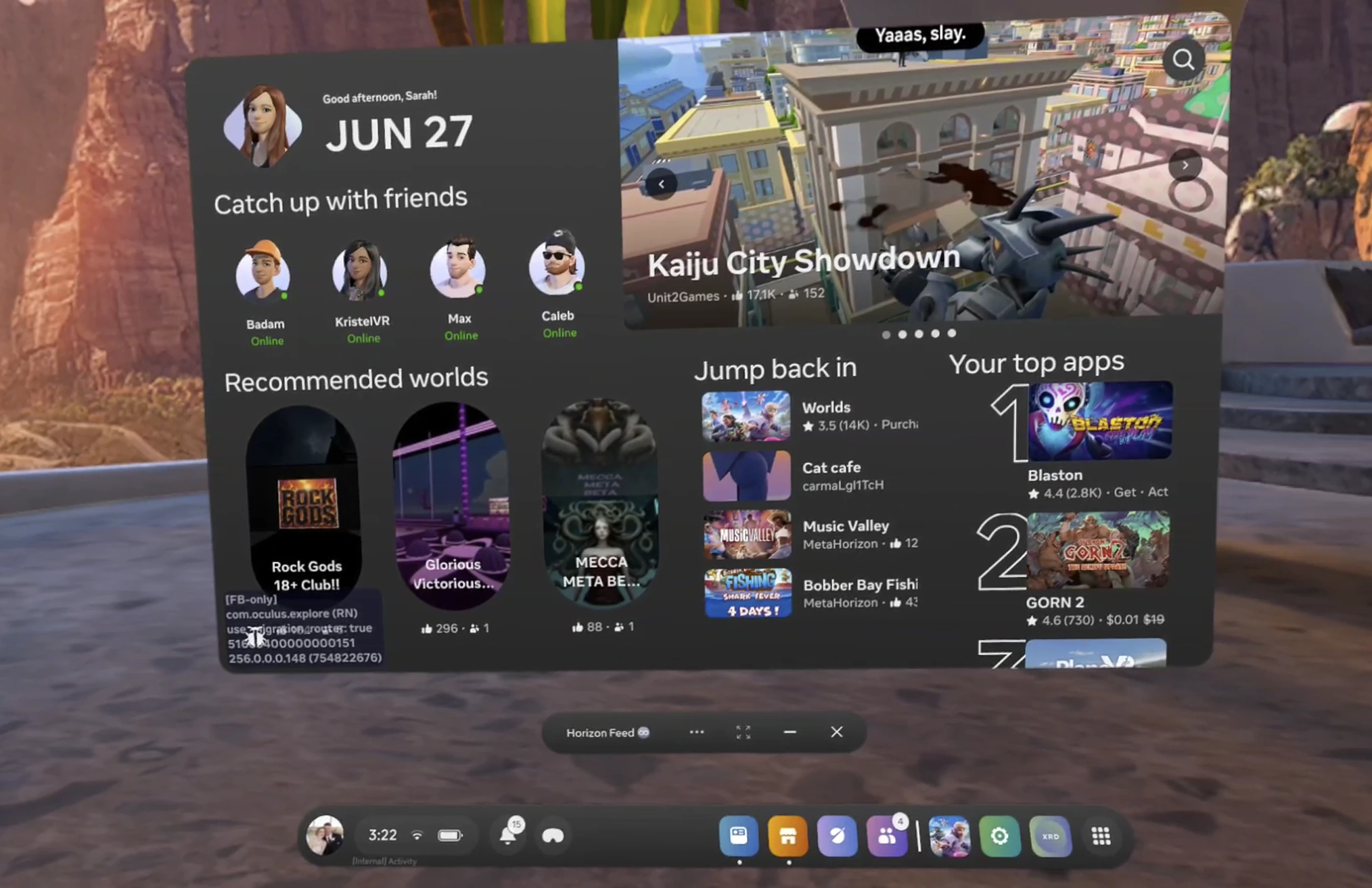
This is what people saw when putting on a VR headset.

Previous landing experience

Problems

Duplicative discovery surfaces

People had a hard time grasping the difference between the horizon feed panel app in front of them and the store app.

Pushy

Landing in a view where most of the recommendations are content upsells was unwelcome to most people because they already have an intent in mind when putting on their device. Witnessed by most people closing this app immediately upon loading.

Busy, yet underwhelming

The initial landing experience feels cluttered and overwhelming, and also unexpectedly flat and contained for a VR device.

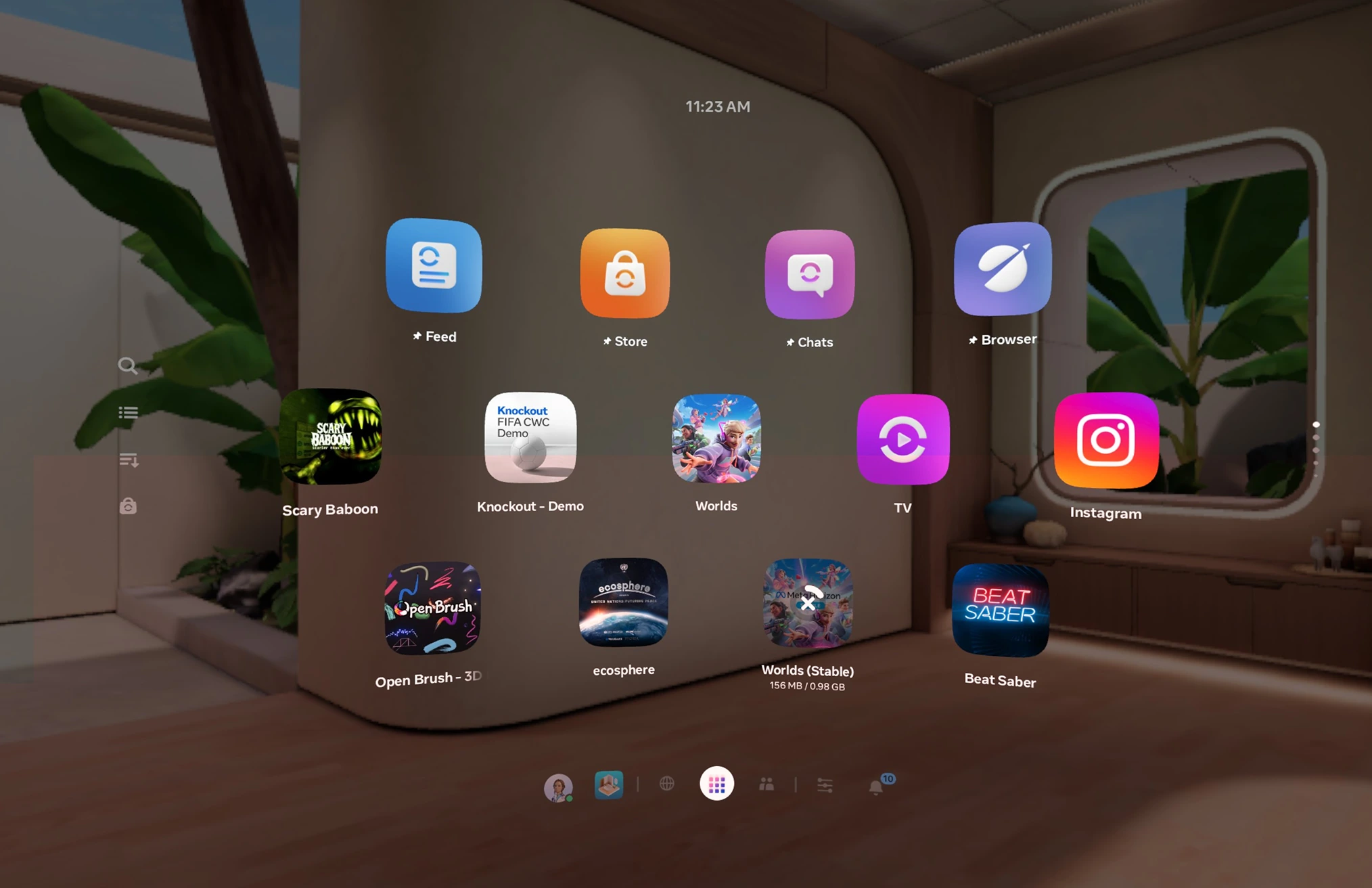
Updated landing experience

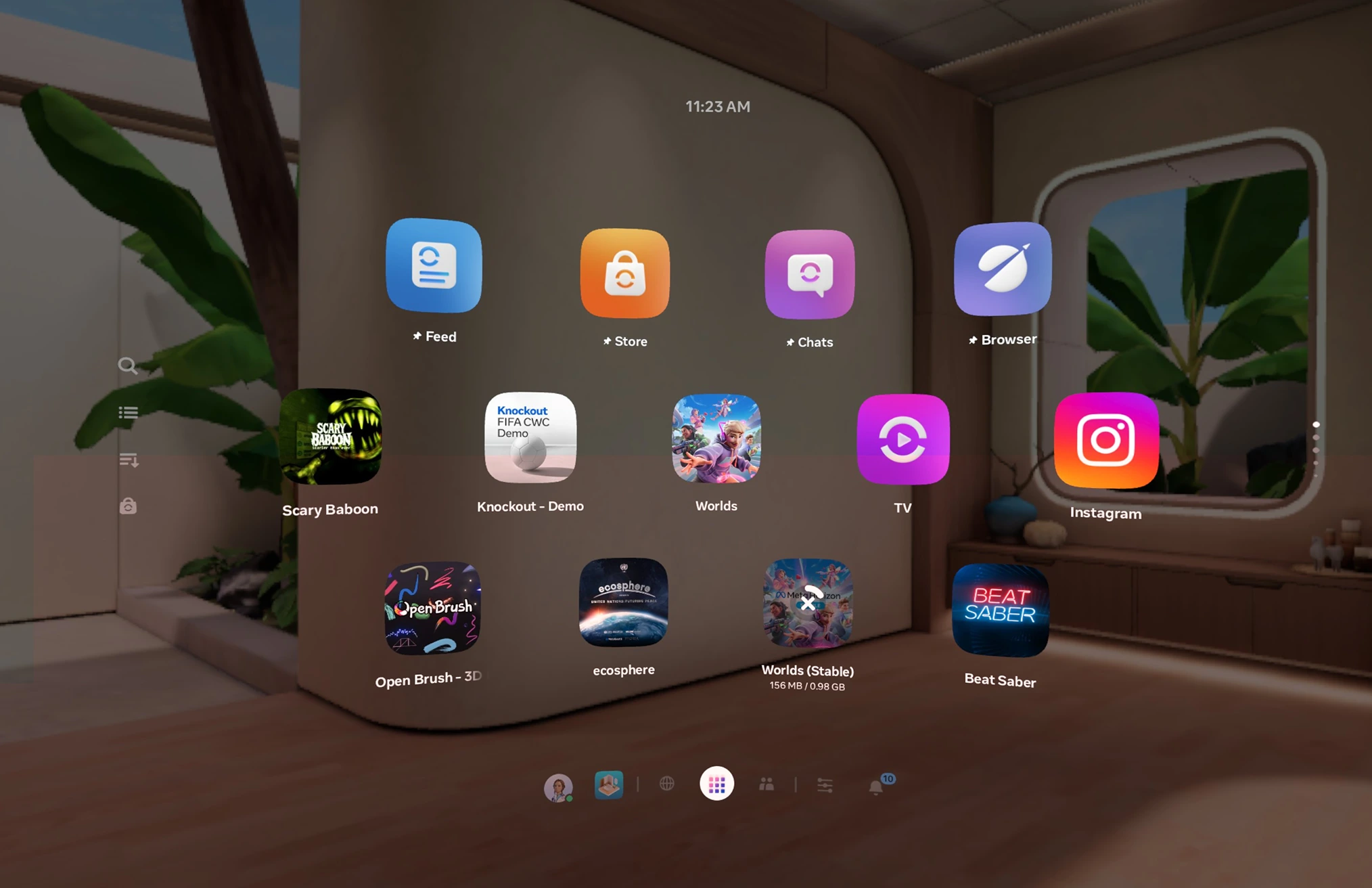
This is the new version of what people see when they put on the headset.

Updated landing experience

Problems

Harder to find things to do

Without a map to guide what's possible in VR, people were having a harder time figuring out what to use their device for.

Declining engagement and monetization

Due to the difficulty in finding new use cases, we saw significant declines in time spent and monetization metrics with this redesign.

Project context

We believe in the general compute vision

Our goal is to move away from the perception that VR is just a gaming console and towards a premium first class OS to rival other products you use every day.

We still care about developer success

While executing the new device vision, we still need to ensure it's a great experience for gaming, and give people channels to discover the use cases on our platform.

Design challenge

Ensure that people are still able to find experiences they want to engage with, without compromising the long-term vision of a user centered OS.

Timeline

Metric regressions with the redesigned vision required urgency to identify a long-term viable solution. I was asked to come up with a proposal to present to leadership in less than 2 weeks.

My role

I was the IC design leader on this ambiguous problem. I started by planning my approach, which included a kickoff with all relevant stakeholders and XFN experts, a design sprint, and facilitating XFN alignment and materials for review.

Process

Design sprint

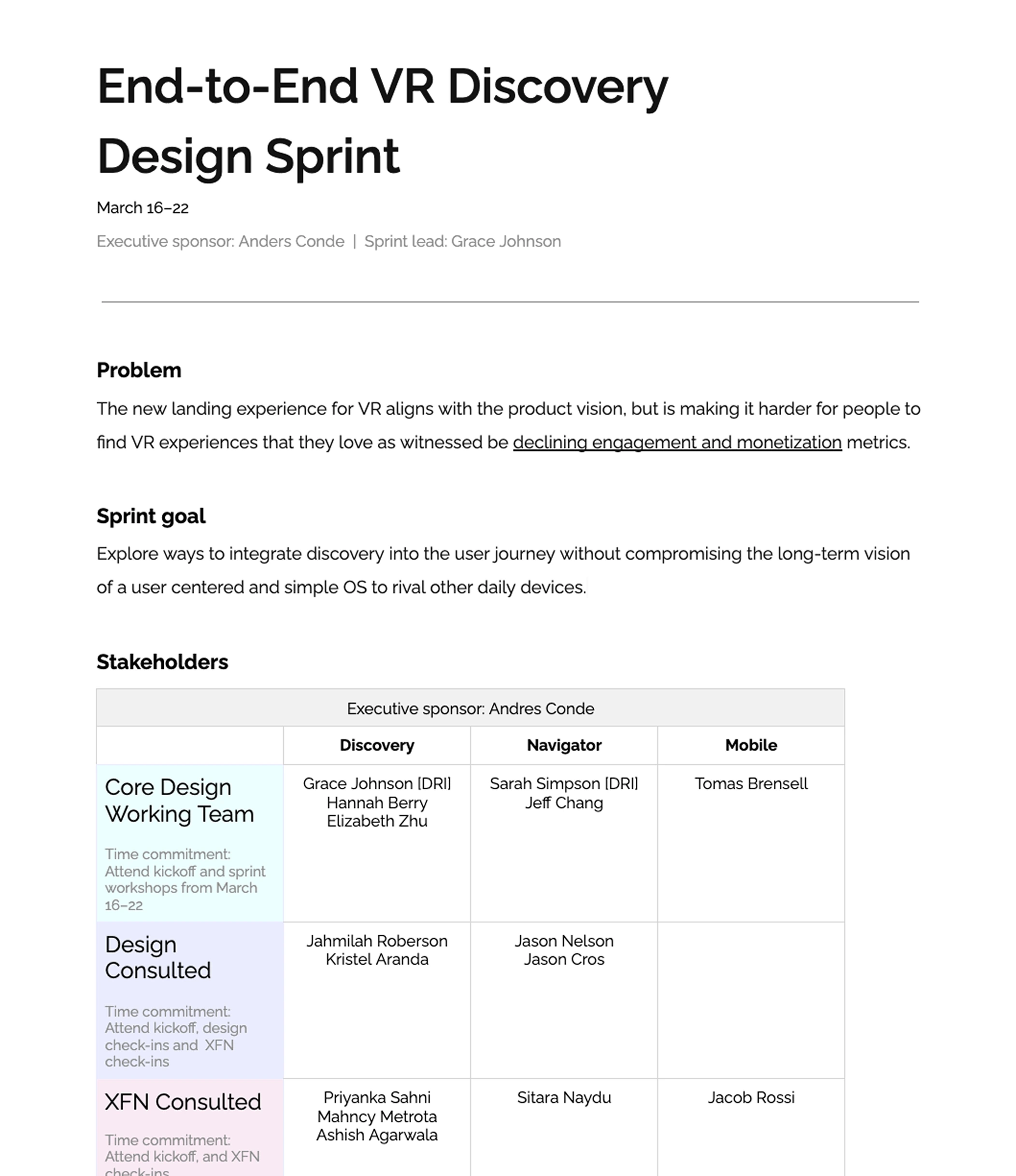
I started by planning, organizing, and leading a design sprint to generate a divergent set of discovery concepts.

This sprint included 16+ XFN stakeholders and consisted of a kickoff day where I invited guest speakers from DS, UXR, and several relevant product teams to ground the team of 5 contributing designers in the problem space with context.

Discovery journey

Discovery journey

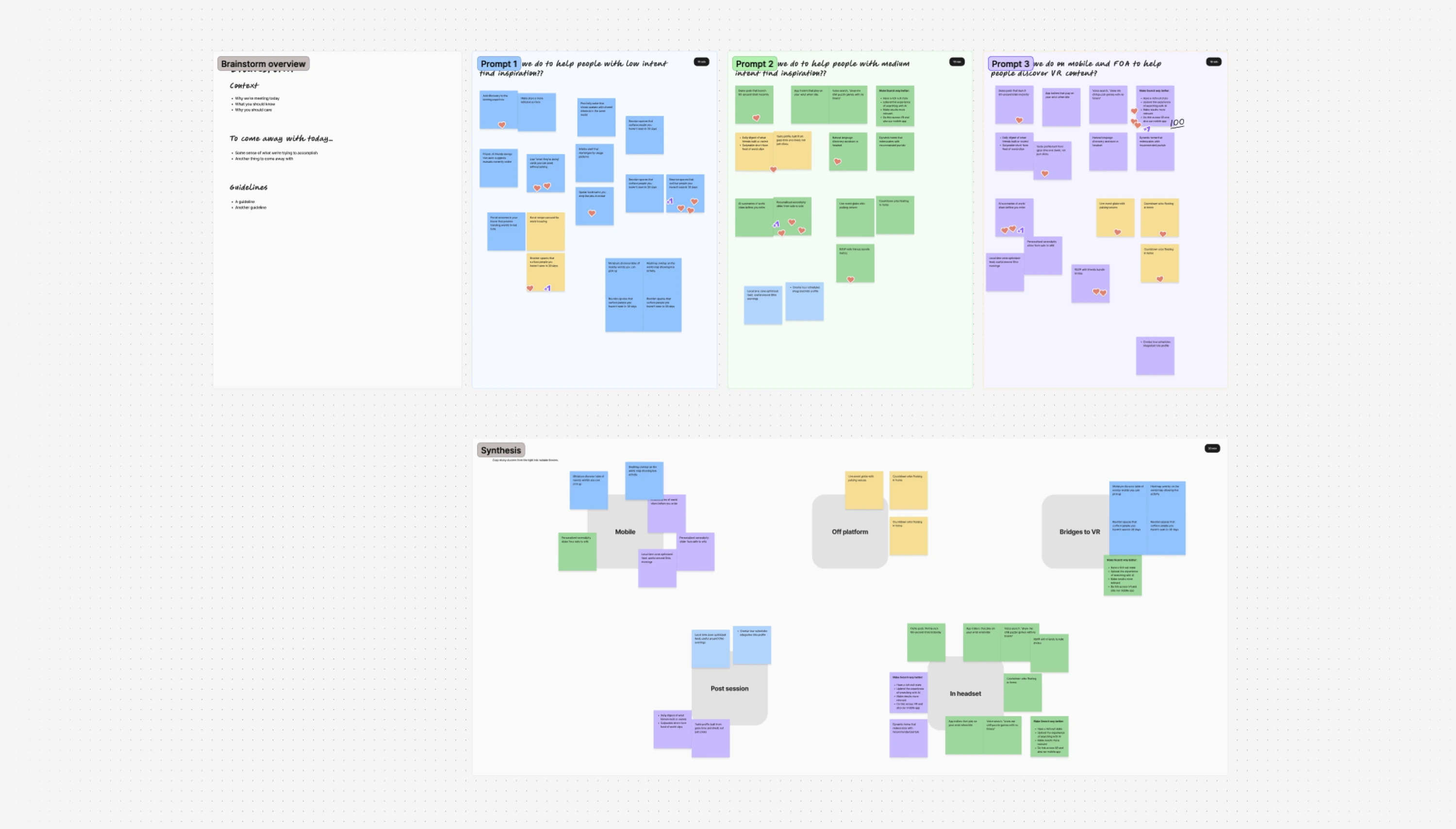
Brainstorm

Brainstorm

Ideas mapped

Concepts mapped to the discovery journey

Iterations

Rapid ideation

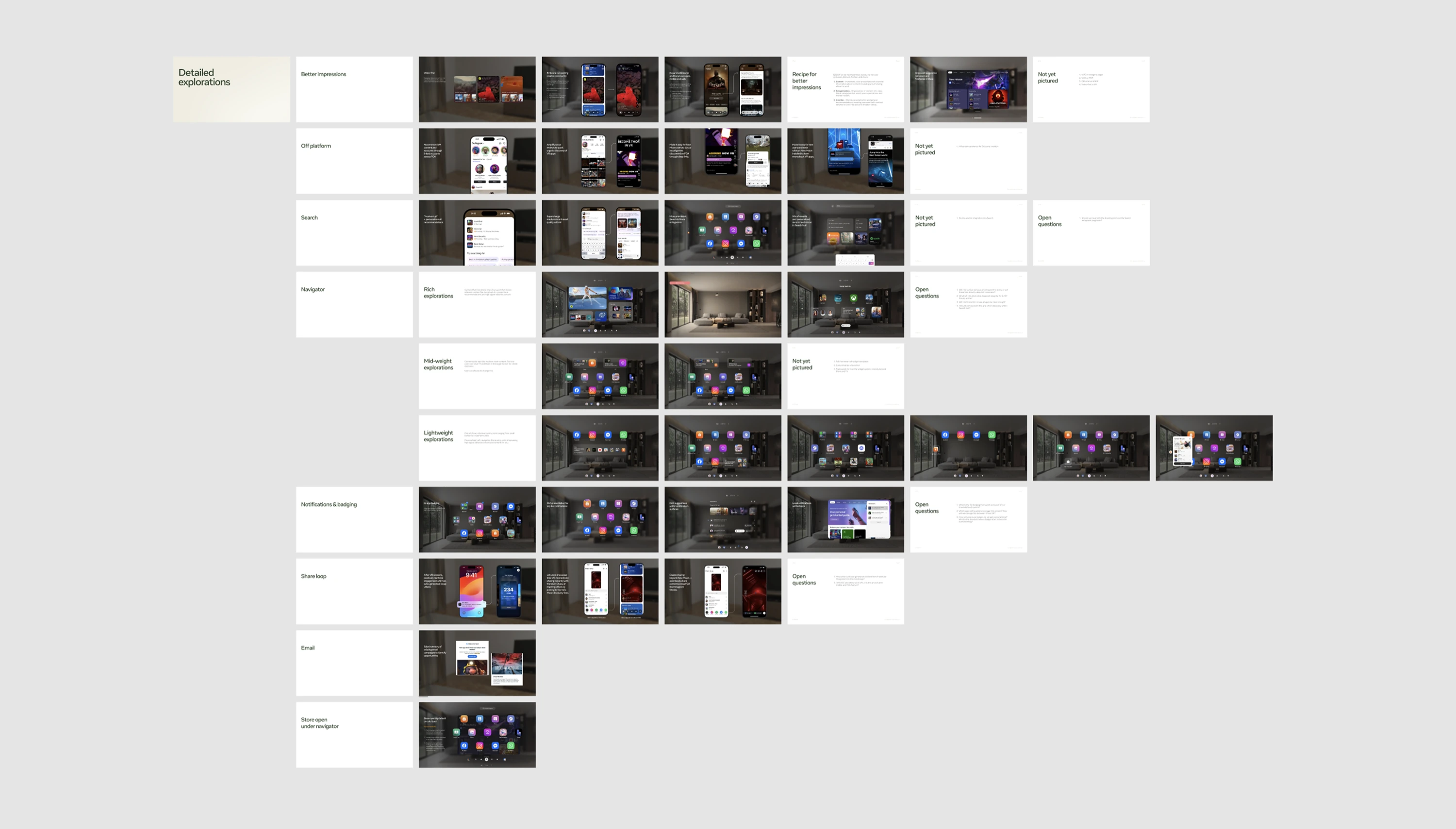
After generating several solid explorations, I put together a slide deck outline for the working team to contribute to—this gave the sprint structure and assigned individual designers specific tasks to contribute to.

Discovery process deck

Following this check-in, we iterated on ideas and continued to explore and further refine the concepts—particularly those which were most controversial:

Iterations 2

Solution

Instead of investing in just one moment,

meet people where they are across their entire journey.

Today
Today
Today — new landing experience
Credit to Elizabeth Zhu for this prototype

Today

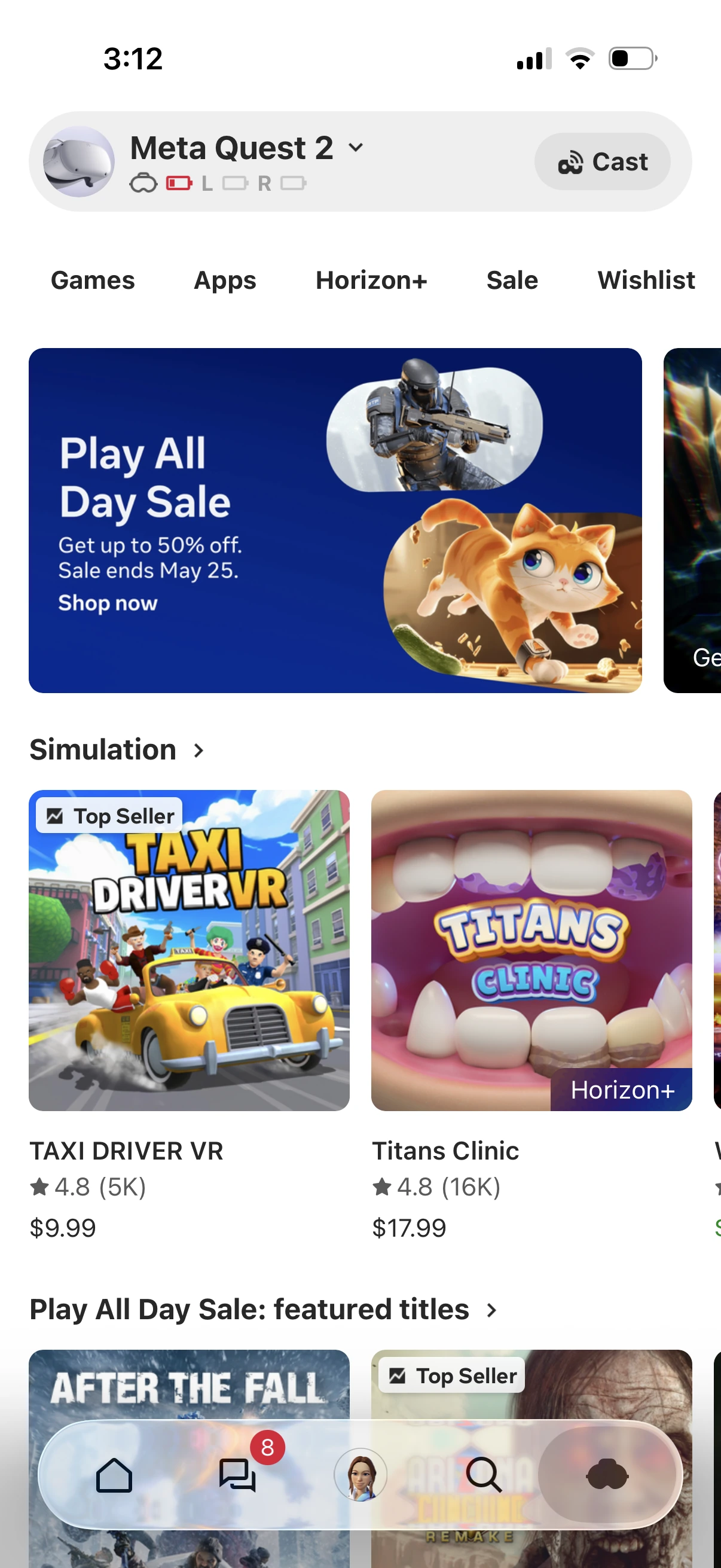
Most people go off-platform to discover because they are looking for gameplay videos + trusted reviews not found here today.

Opportunity 1

Introduce video-first browsing with editorial storytelling, and bring UGC on-platform.

Opportunity 2

Create seamless bridges between off-platform content and on-platform detail pages.

Today

Stale null state recommendations, and poor medium intent recommendation quality.

Opportunity

Improve freshness of null state recommendations, and supercharge search result quality with AI.

Today

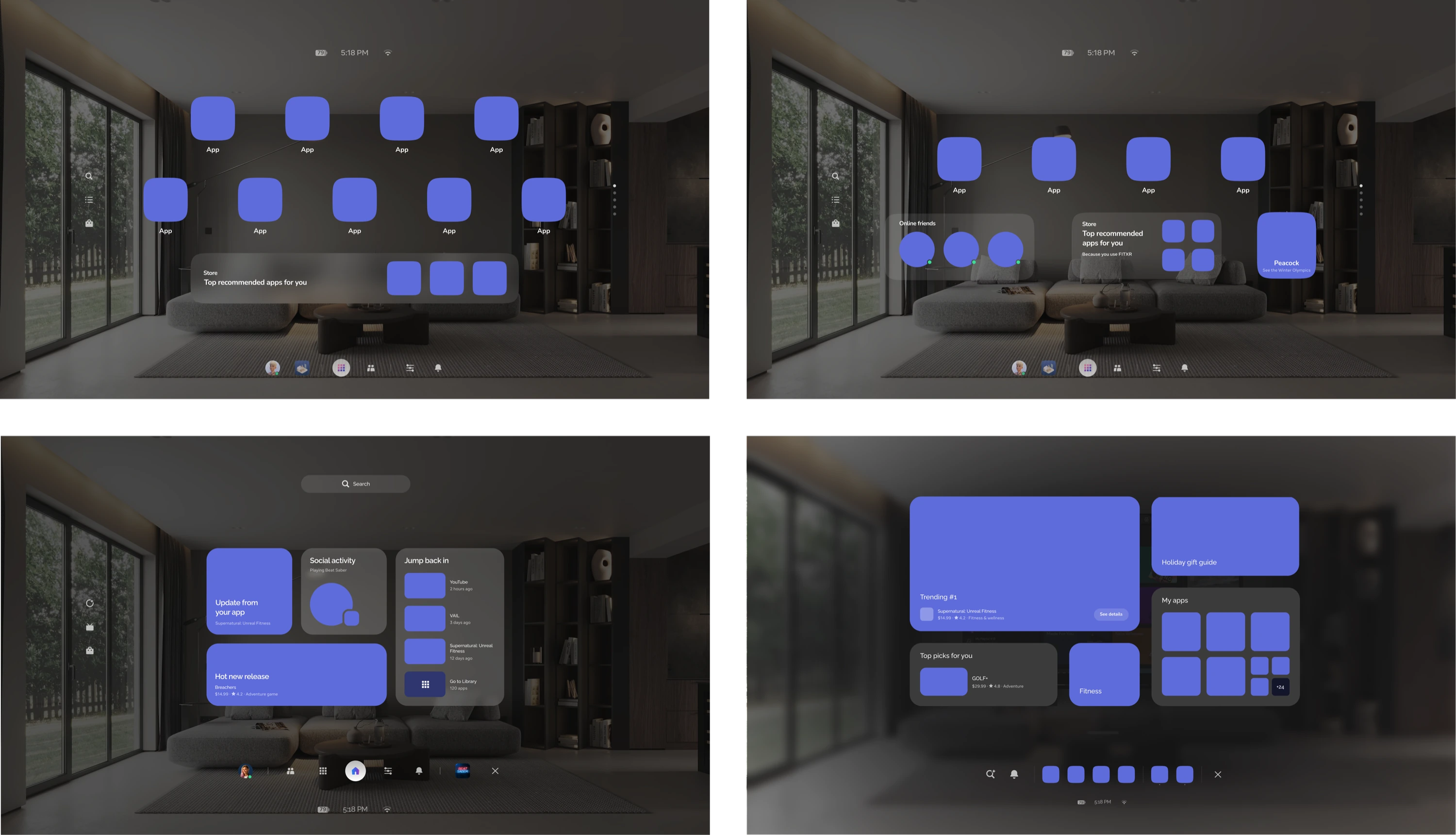
No discovery is integrated into the landing experience without explicitly opening a panel app.

Opportunity

Maintain the simple landing experience focused on your stuff — integrating discovery on swipe.

Opportunity

Integrate timely discovery at the moment of experience exit, when the user is contemplating what to do next.

Opportunity

Add a share loop after finishing VR sessions.

Research • Planning
Set-Up Activities
Donning
Immersive Experience
Return Home
Post-Doffing
4

Discovery on device

People should be able to browse and discover new experiences without leaving their flow.

Discovery is buried and requires leaving your current context to find new content.

5

Social sharing

Word of mouth is one of the most powerful discovery channels — make sharing effortless.

A frictionless share moment that turns every session into a discovery opportunity for someone new.

Impact

After presenting this to VR leadership, this strategy became POR informing team roadmaps.

Next project Meta Quest Store → Also explore VR Global Search →